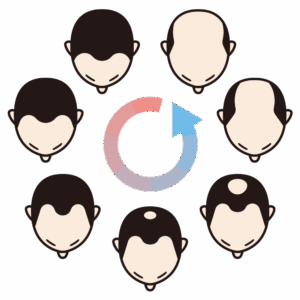
Causes of Hair Loss
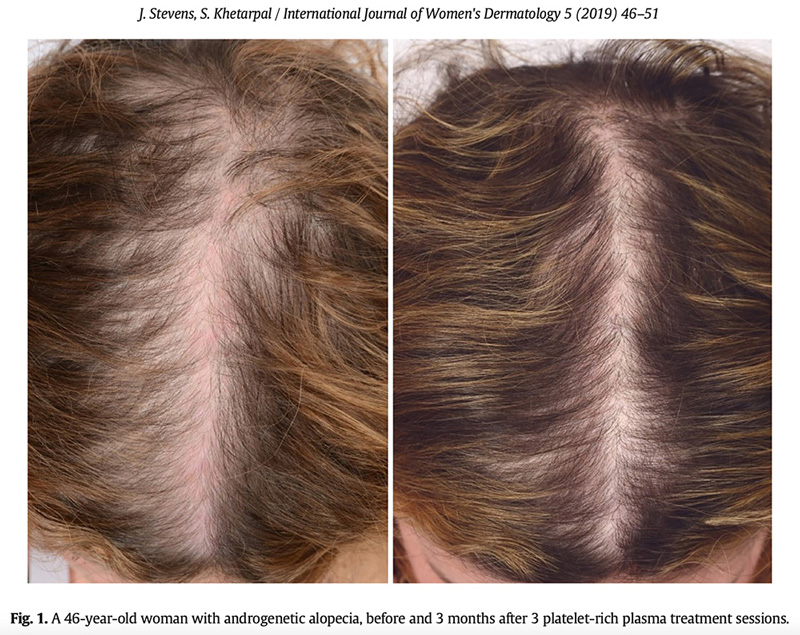
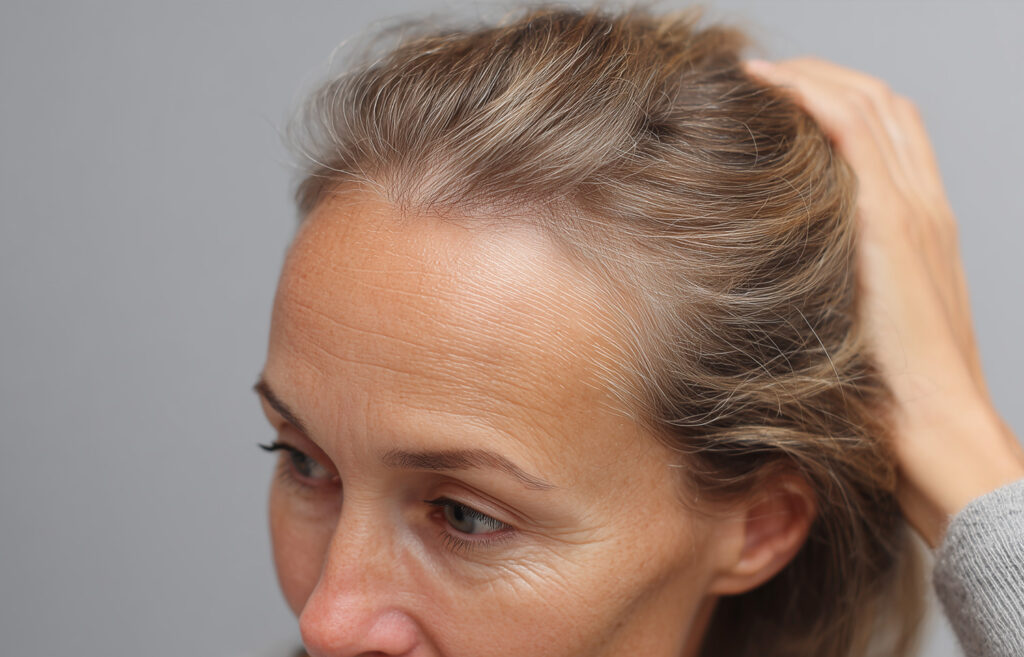
The most common cause of hair loss is hereditary, and is known as androgenic alopecia (AGA): male-pattern baldness and female-pattern baldness. AGA is estimated to occur in 80% of men and 50% of women throughout their lifetime. AGA generally occurs gradually and in a predictable pattern – a receding hairline and bald spots in men, and thinning hair along the crown and widening of the central part in women. There is no cure for this type of hair loss, but AGA may be managed with both aesthetic treatments and medical support.
Other causes of hair loss include hormonal changes (pregnancy, childbirth, menopause, thyroid problems) and medical conditions (autoimmune conditions, infections, hair-pulling disorder), medications, stressful events (telogen effluvium), and certain hairstyles that put traction on the hairs.
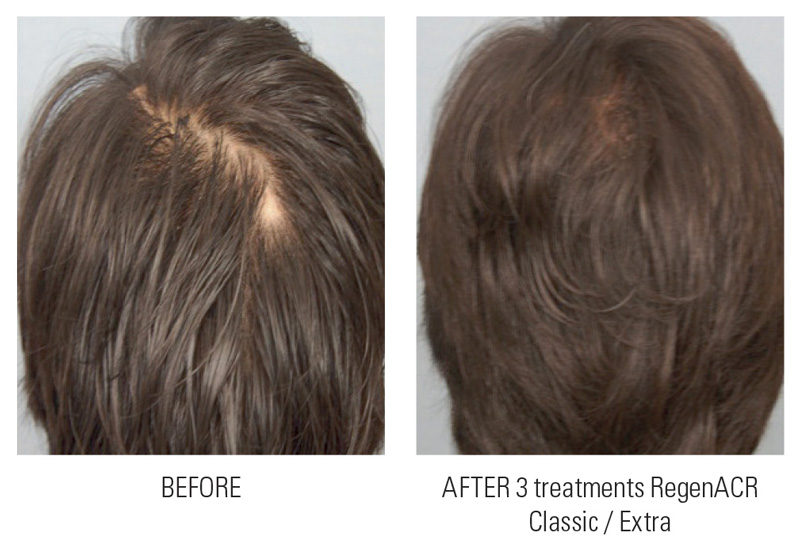
PRP treatments are best for those experiencing AGA hair loss. A large body of scientific evidence supports its use in AGA.
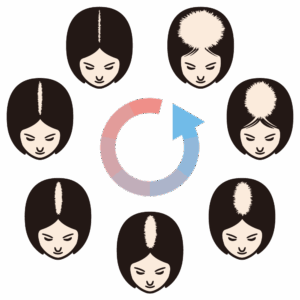
Hair Growth Cycle
All hairs on the scalp and body grow according to a continuous cycle, which is made up of 4 phases:
- Growth (Anagen)
- Transition (Catagen)
- Resting (Telogen)
- Shedding (Exogen)
Around 20-30% of hair is in transition or resting, while the rest are actively growing. For healthy hair, this growth phase usually lasts about 3-6 years. However, this phase is much shorter in unhealthy hair, which will result in less hair growth and more hair loss.